Baby Products Liquidation Guide
Sell excess baby gear, apparel, and feeding inventory through off-price, dollar, and donation channels. CPSIA, recall traceability, and brand-safe export options.
Hylke Reitsma is co-founder of Forthsuite and a supply chain specialist with 8+ years of hands-on experience at Shell, Verisure, and Stryker. He holds an MSc in Supply Chain Management from the University of Groningen and writes practical guides to help e-commerce teams run leaner, faster supply chains. Selected by Replit as 1 of 20 founders for the inaugural Race to Revenue Cohort #1 (2026) and certified as a Replit Platform Builder.
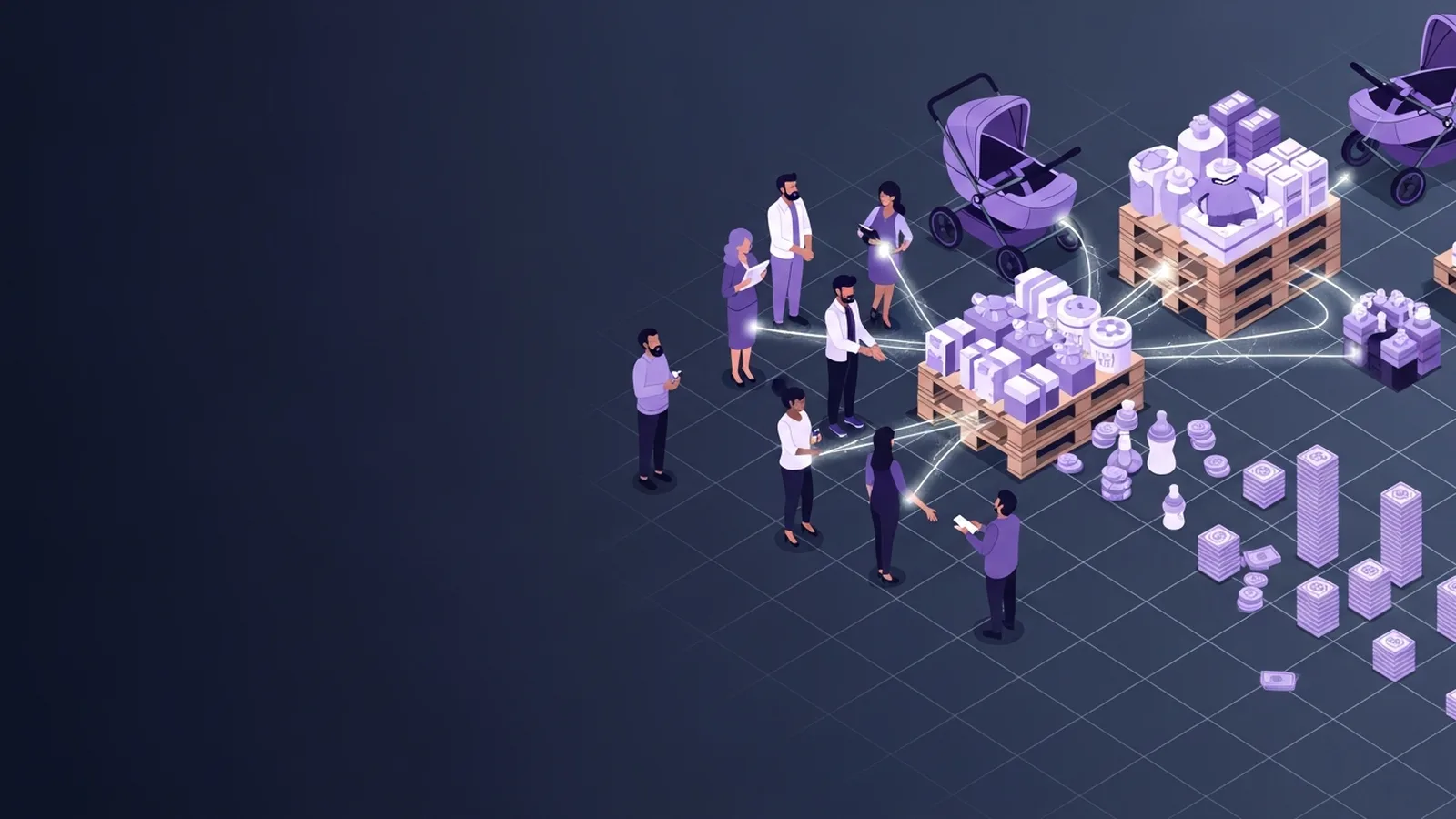
Baby Products Liquidation: A Safety-Compliant Recovery Playbook
TL;DR: Sell excess baby gear, apparel, and feeding inventory through off-price retailers, dollar stores, and donation channels while maintaining CPSIA compliance, recall traceability, and brand-safe export standards. Forthclear helps Shopify operators liquidate overstock baby products through vetted secondary-market channels that handle regulatory requirements and protect your brand reputation.
TL;DR. Sell excess baby gear, apparel, and feeding inventory through off-price, dollar, and donation channels. CPSIA, recall traceability, and brand-safe export options.
This guide is one of 20 vertical spokes inside the Wholesale Liquidation Guide. The pillar covers the cross-category recovery framework (channel ladder, pricing stack, holding-cost math); this spoke covers what works specifically for baby products overstock on Shopify. The short answer to "How do I liquidate excess baby products, gear, and apparel inventory?": match channel to brand-protection tolerance and recovery-rate target using the ladder below.
Why baby-product liquidation is the most safety-sensitive vertical
Baby products carry the most aggressive recall regime of any consumer category — CPSC enforcement targets the original brand for downstream safety violations regardless of who currently owns the inventory. Build recall-traceability and safety-label preservation into every liquidation contract; otherwise a future recall traces back to you with no liquidator on the hook.
CPSIA and recall traceability for liquidators
Under CPSIA, every children's product retains its General Conformity Certificate (GCC) and tracking-label obligations through resale. Buyers cannot remove or alter age-grade, choking-hazard, or safety-warning labels. Maintain a per-lot manifest with batch codes and shipping addresses so a future recall can be executed within CPSC's 24-hour notification window.
Off-price and dollar-channel baby buyers
Buy Buy Baby's relaunched footprint (post-2024 acquisition) pays 28–45% of MSRP for branded baby gear and apparel with intact packaging. Burlington Baby Depot takes branded baby at 25–40% recovery. Five Below takes baby accessories under $5 ASP at 15–25%. Avoid dollar-channel for hardgoods (car seats, strollers) where safety-recall complexity exceeds the cash recovery.
Donation: Cradles to Crayons, Baby2Baby — tax math
Cradles to Crayons and Baby2Baby route branded baby goods to low-income families through a network of 150+ partner agencies, with IRC 170(e)(3) documentation. For C-corp donors, the enhanced deduction (cost basis + half unrealized gain) frequently outperforms off-price retail recovery on aged baby apparel and gear.
Brand-safe export channels
International export to LATAM and Eastern Europe distributors recovers 28–48% on branded baby gear and apparel, with near-zero domestic brand-anchor damage. Destination-country baby-product safety regimes (EN 1888 for strollers in EU, CCC in China) must be met — verify before shipping.
How Forthclear helps baby brands clear overstock
Forthclear's baby-products buyer pool is CPSIA-compliance filtered, with explicit recall-traceability obligations baked into every contract. Donation aggregators (Cradles to Crayons, Baby2Baby) and international distributors are first-class segments alongside off-price retail.
FAQ
How do I liquidate excess baby products, gear, and apparel inventory?
Sell excess baby gear, apparel, and feeding inventory through off-price, dollar, and donation channels. CPSIA, recall traceability, and brand-safe export options. The framework above is the operator answer in under 1,500 words; the cross-category context lives in the Wholesale Liquidation Guide pillar.
What recovery rate should I expect when I liquidate baby products inventory?
Recovery in baby products liquidation is bracketed by channel: specialty B2B and Forthclear-style verified-buyer marketplaces typically pay 35–65% of cost; off-price retail pays 22–45%; mixed-pallet jobbers pay 8–18%. Specifics depend on brand strength, season, and SKU/curve completeness.
Does Forthclear support baby products liquidation guide?
Yes. Forthclear is built for Shopify merchants moving excess inventory in verticals like baby products. You set a floor price, Forthclear matches your stock with verified B2B buyers under NDA and channel-control contracts, and the Shopify integration handles inventory drawdown automatically when a buyer commits.
Where does this fit in the broader Wholesale Liquidation Hub?
This spoke is one of 20 inside the Wholesale Liquidation Guide pillar. The pillar covers the full operator overview across every vertical; come back to this spoke when you specifically need to solve baby products liquidation guide.
Next step
For the cross-category playbook, the Wholesale Liquidation Guide stitches all 20 vertical spokes together. If you want to ship baby products liquidation in one afternoon on Shopify, connect Forthclear and get verified-buyer matches inside 48 hours.
Building a Recall-Ready Liquidation Workflow
The most common mistake in baby-product liquidation is treating overstock clearance like any other category. Because CPSC holds the original brand accountable for downstream safety failures, your liquidation process must be designed backward from recall execution. Start by creating a master manifest for every batch or lot you intend to liquidate. Document the product SKU, manufacturing date codes, quantity, packaging condition, any known safety certifications or test reports, and the name and contact details of the buyer who receives it. Store this digitally in a format you can retrieve and share with CPSC within hours if a recall occurs.
Next, require your liquidation partner or buyer to sign a contract that explicitly assigns recall-notification responsibility. The contract should specify that the buyer will notify you immediately upon receipt of any CPSC recall notice, and that safety labels must remain intact and readable throughout the product's shelf life. For physical inventory, photograph representative units before they leave your warehouse, showing packaging integrity and label visibility. This evidence protects you if a buyer later claims labels were unreadable or missing.
Finally, store lot manifests for at least three years after the inventory ships. You may not need them, but if a recall surfaces years later, you'll be the only entity capable of pinpointing which retailers, regions, or customers received which batches. This traceability is the difference between a manageable recall and a brand crisis.
Timing Your Channel Choice: Recovery Rate vs. Brand Reputation
Baby-product liquidation often presents a tension: the fastest cash recovery may come from channels with the highest reputational risk. Dollar stores and deep-discount retailers move inventory quickly and pay cash, but your brand will appear alongside unrelated products in a crowded, price-driven environment. Conversely, donation channels and brand-safe export take longer to arrange and recover less per unit, but they protect the equity you've built in your brand.
A practical framework is to tier your overstock by age and condition. Current-season items with intact packaging and full safety documentation are candidates for off-price retail (Buy Buy Baby, Burlington) or international distribution. Mid-life or slightly damaged goods—items that fail aesthetic inspection but are fully functional—suit dollar-store channels where visual presentation matters less. Obsolete, discontinued, or cosmetically compromised items that would harm brand perception if photographed by a competitor are best routed to donation, where they serve families in need and generate tax deduction value without public association to your brand.
What Happens If You Skip the Documentation Step?
Imagine a stroller or car seat you liquidated two years ago is recalled. The CPSC contacts you. You have no manifest, no buyer contact information, and no way to tell them which retailers received which batches. From the regulator's perspective, you've failed to maintain traceability. You may face enforcement action, be required to fund a public notice campaign, or face liability if anyone was harmed. The buyer you sold to, meanwhile, has no incentive to cooperate—you never formalized the recall-obligation chain in writing.
By contrast, if you documented the lot and contractually assigned recall notification to your buyer, you can retrieve that information within hours and provide CPSC with a clear, auditable record of where the inventory went. You've also created accountability: if the buyer fails to notify you or CPSC, that breach is documented in your contract and you can demonstrate you acted in good faith.
Balancing Speed, Compliance, and Cash Recovery
Baby-product liquidation rarely allows you to optimize all three priorities simultaneously. The fastest channels (dollar stores, clearance bins) often demand the lowest prices. The safest channels (verified international distributors, vetted donation partners) take weeks to coordinate. The most profitable channels (off-price retailers) require negotiation and may hold inventory on consignment before paying you.
Set your priority before you start outreach. If you need cash within 30 days, accept a lower recovery rate and route to dollar channels—but document and contract carefully. If you have 60–90 days and want to protect brand positioning, invest time in off-price retail or donation channels. If your primary goal is safety compliance and you're willing to accept minimal cash recovery, donation routes are fastest and carry the strongest liability protection.
About the Author

Hylke Reitsma is co-founder of Forthsuite and a supply chain specialist with 8+ years of hands-on experience at Shell, Verisure, and Stryker. He holds an MSc in Supply Chain Management from the University of Groningen and writes practical guides to help e-commerce teams run leaner, faster supply chains. Selected by Replit as 1 of 20 founders for the inaugural Race to Revenue Cohort #1 (2026) and certified as a Replit Platform Builder.
LinkedIn