Savannah Liquidation: Recovery Playbook for E-commerce
Practical guide to savannah liquidation. Learn what works, common pitfalls, and how to apply it in a Shopify operation.
Hylke Reitsma is co-founder of Forthsuite and a supply chain specialist with 8+ years of hands-on experience at Shell, Verisure, and Stryker. He holds an MSc in Supply Chain Management from the University of Groningen and writes practical guides to help e-commerce teams run leaner, faster supply chains. Selected by Replit as 1 of 20 founders for the inaugural Race to Revenue Cohort #1 (2026) and certified as a Replit Platform Builder.
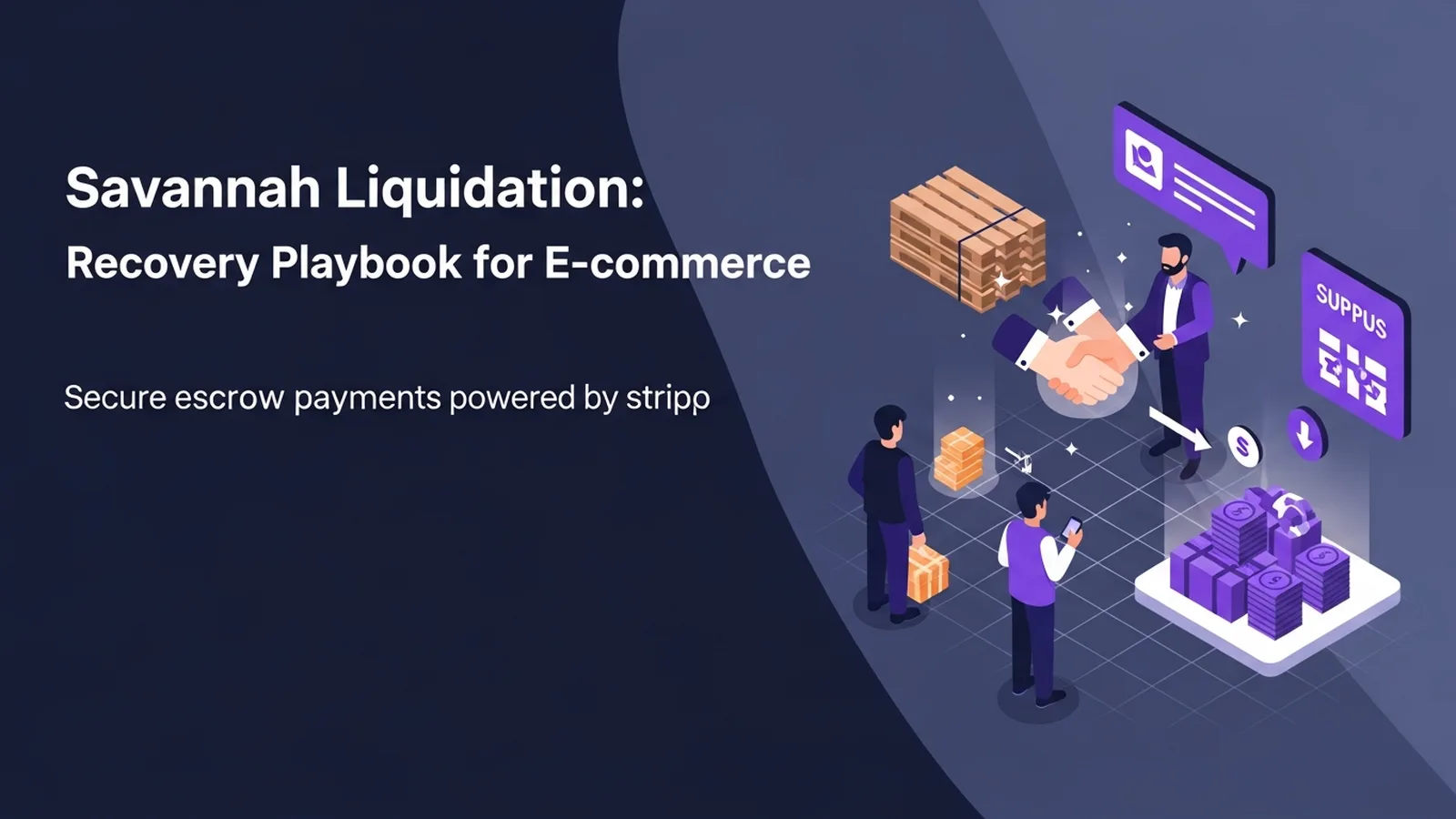
TL;DR: Savannah liquidation is a regional recovery strategy for clearing aged B-stock inventory through Southern US secondary markets, typically yielding 18–32% of original wholesale cost. Use it when holding costs exceed projected recovery within 90 days, your SKU count is under 500 units per pallet, and you have bulk buyer demand in Georgia, Florida, or South Carolina channels.
Last updated: July 2026
What savannah liquidation actually means
Definition
Savannah liquidation refers to the practice of routing slow-moving, returned, or overstocked e-commerce inventory through liquidation channels centred in Savannah, Georgia and the broader Southeast corridor. The term describes both the geographic hub and the operational playbook: consolidating B-stock onto mixed pallets, partnering with regional liquidators or auction platforms, and accepting a steep discount in exchange for immediate cash and freed warehouse space.
Unlike national liquidation programs that distribute inventory across multiple markets, Savannah liquidation leverages the port city's logistics infrastructure and concentration of discount retailers, pallet resellers, and exporters. Merchants ship consolidated pallets to a Savannah-area warehouse, where a liquidator sorts, grades, and resells goods through offline auctions, bulk buyer networks, or export channels to Latin America and the Caribbean.
Recovery rates depend on product category and condition. Consumer electronics in sealed packaging might fetch 28–35% of wholesale cost. Apparel with missing tags or seasonal goods past peak demand often settle at 12–18%. The calculation is simple: compare your all-in holding cost per day against the net proceeds after liquidator fees and freight.
Why it matters in 2026
Warehouse rates in primary US fulfilment markets have climbed steadily, making the cost of storing dead inventory a bigger drag on margin than the loss on sale. Shopify merchants using third-party logistics providers now pay storage fees that reset monthly, not quarterly, which means a pallet sitting for 120 days can exceed the product's residual value.
Regional liquidation channels have also matured. Savannah-based liquidators now offer API integrations, real-time inventory manifests, and faster payment terms (net-15 instead of net-45), which makes the decision less about writing off a loss and more about optimising cash conversion cycles. For brands running lean operations, converting stale SKUs into working capital in two weeks beats waiting six months for a markdown sale that might not clear the stock anyway.
The rise of mixed-channel selling has also shifted merchant expectations. A brand that sells direct-to-consumer on Shopify, wholesales to boutiques, and operates Amazon FBA now juggles three return streams and three definitions of "unsellable." Savannah liquidation provides a single exit valve for the bottom 10% of inventory that doesn't fit any primary sales channel.
When savannah liquidation is the right move
Decision criteria
Run the numbers first. Calculate your holding cost per unit per month: warehouse rent, insurance, labour to cycle-count and repalletise, and opportunity cost of cash tied up in inventory. If that monthly burn exceeds 8% of the product's current resale value, liquidation starts to make sense within 60 days.
Look at your inventory age curve. Products sitting beyond 180 days with fewer than two units sold per month are unlikely to move through regular discounting. Seasonal apparel past its peak (swimwear in November, coats in April) and consumer tech more than one generation old fall into this category. If your aging report shows more than 15% of SKUs in this bucket, you have a structural problem that promotions won't fix.
Check your SKU-to-pallet density. Savannah liquidators prefer mixed pallets with 8–20 SKUs per pallet and at least 12 units per SKU. If you have 300 SKUs with two units each, you'll pay more in sortation fees and see lower bids. Consolidate first, or wait until you can build full pallets of similar product categories.
Verify buyer demand in your category. Apparel, home goods, toys, and non-perishable consumer packaged goods move quickly through Savannah channels. Bulky furniture, hazardous materials, and products requiring refrigeration do not. Call two liquidators and ask for recent recovery rates in your category before committing.
Anti-patterns
Don't liquidate products you can still sell profitably through your own channels. A Shopify merchant selling handmade candles with a 60% margin should run a flash sale or bundle promotion before accepting 20 cents on the dollar from a liquidator. Liquidation is for inventory that has already failed in your primary and secondary sales channels.
Avoid liquidating branded goods with strict MAP (minimum advertised price) policies unless you've pulled the tags and removed branding. Liquidators resell through discount chains and flea markets where your $80 wholesale item ends up on a table for $15, undercutting your authorised retailers and violating agreements. This is a fast way to lose distribution partners.
Don't ship partial pallets unless the liquidator has confirmed they'll accept LTL (less-than-truckload) freight. Many Savannah buyers only take full truckloads or consolidated shipments, and you'll pay 40–60% more per pallet in freight if you're sending three pallets instead of thirty. Wait until you can fill a truck, or partner with other merchants to share a container.
Never liquidate without pulling customer data first. Returned products often still have packing slips, shipping labels, or embedded order numbers. A liquidator has no obligation to scrub that data, and customer information ending up in secondary markets is a compliance liability and a brand risk.
How to implement savannah liquidation step-by-step
Prereqs
Before you contact a liquidator, you need three things ready: a complete inventory manifest with SKU, quantity, condition grade, and original cost; high-resolution product photos showing actual condition (not stock images); and a landed cost estimate to Savannah that includes freight, palletising, and any sortation fees your 3PL charges to prep the shipment.
Export your aged inventory report from Shopify or your inventory system and filter for items over 120 days old with velocity below 0.5 units per month. Cross-reference this against your warehouse stock to confirm physical location and condition. If you're storing inventory across multiple warehouses, consolidate to a single location first to reduce freight complexity.
Obtain at least two liquidator quotes. Email a manifest and photos to three Savannah-area buyers and ask for a per-pallet bid, payment terms, and any sortation or grading fees. Standard terms are 18–25% of estimated retail value, paid net-15 after receipt and inspection. Verify whether the liquidator handles freight or if you're responsible for delivery to their dock.
Step 1: Audit
Pull every unit listed on your liquidation manifest and physically inspect it. Liquidators will downgrade or reject items that don't match the condition you described, and disputes eat into your recovery rate. Grade each item as A-stock (new in box), B-stock (open box, complete), or C-stock (cosmetic damage, missing components).
Remove any items with safety recalls, expired certifications, or legal restrictions. Liquidators operating in export channels have limited appetite for compliance risk, and you remain the liable party if a recalled product causes harm after resale.
Create a packing list with box-level detail: box 1 contains SKUs A, B, C with quantities X, Y, Z. Tape a printed copy inside each box and send the master manifest to the liquidator before you ship. This speeds their receiving process and reduces the chance of a dispute over missing units.
You should now see a clean, graded inventory list, a packing manifest, and confirmed quotes from at least two liquidators.
Step 2: Configure
Book your freight. If you're shipping a full truckload (22–26 pallets), get quotes from three LTL carriers and compare transit time against cost. Savannah liquidators typically receive Monday through Thursday, 8 AM to 3 PM, and require 48 hours advance notice. Confirm delivery appointments before tendering the load.
Update your inventory system to reflect the outbound transfer. Create a new location or warehouse code in Shopify called "Liquidation - Savannah" and transfer all SKUs to that location. This prevents overselling and keeps your available-to-promise inventory accurate while goods are in transit.
Set up payment tracking. Most liquidators pay via ACH within 15 days of receiving and inspecting your shipment. Create a tracking line item in your accounting system with the expected payment date and projected recovery amount. If payment doesn't arrive within 20 days, follow up immediately.
You should now see a confirmed freight booking, updated inventory locations in Shopify, and a payment tracking entry in your accounting system.
Step 3: Verify
Track the shipment daily. Liquidators will not notify you of delivery; you need to monitor the carrier tracking and confirm when the freight arrives. Once delivered, email the liquidator to confirm receipt and ask for an inspection timeline. Most complete grading within 3–5 business days.
Review the inspection report as soon as it arrives. Liquidators will list any discrepancies between your manifest and the received goods: missing units, condition downgrades, or rejected items. You have 48 hours to dispute findings, after which the inspection report becomes the basis for payment.
Compare the final settlement amount against your original quote. Small variances (5–8%) are normal due to condition downgrades, but anything beyond 15% suggests a problem with your grading process or the liquidator's standards. Document the variance and adjust your grading criteria for the next shipment.
Once payment clears, write off the inventory loss in your accounting system and update your cost-of-goods-sold to reflect the liquidation. This closes the loop and gives you clean data for evaluating whether savannah liquidation improved your cash position.
You should now see a closed shipment in your freight tracker, a final settlement report from the liquidator, and an updated inventory write-off in your accounting system.
Common savannah liquidation pitfalls
Three mistakes we see most
Overestimating recovery rates is the number one problem. Merchants assume their $40 wholesale item will fetch $12–15 (30%), but liquidators often bid 18–22% after factoring in sortation, grading, and their margin. Run your cash-flow model at 18% recovery, not 30%, and only proceed if the math still works. The upside surprise is better than a shortfall that leaves you underwater on freight costs.
Shipping unsorted mixed pallets kills your recovery rate. A pallet with ten different product categories forces the liquidator to break it down, regrade everything, and build new category-specific pallets for resale. You pay 8–12% in additional fees for that labour. Sort by category before you ship: one pallet of apparel, one pallet of electronics, one pallet of home goods. Liquidators bid higher on clean, sorted loads.
Failing to pull customer data before liquidation creates compliance exposure and brand damage. A returned Shopify order often includes a packing slip with the customer's name, address, and order number. If that product ends up in a flea market with the slip still inside, you've just violated privacy laws in California, Colorado, and the EU. Spend 20 minutes per pallet removing all printed materials, labels, and anything with customer information. It's not optional.
| Mistake | Impact on recovery rate | Fix |
|---|---|---|
| Unsorted mixed pallets | -8% to -12% | Sort by category before shipping |
| Overstated condition grades | -10% to -18% | Use liquidator grading standards, not your own |
| Missing or incomplete manifest | -5% to -15% | Box-level packing list with SKU and quantity |
| Customer data left in products | Legal liability, no rate impact | Remove all packing slips, labels, and printed materials |
| Shipping partial pallets LTL | +40% to +60% freight cost | Wait for full truckload or consolidate with other merchants |
Frequently Asked Questions
What recovery rate should I expect from savannah liquidation?
Expect 18–32% of your original wholesale cost, depending on product category and condition. Consumer electronics and sealed home goods trend toward the high end. Apparel, seasonal items, and open-box products settle at 15–22%. Always model your cash flow at the low end of the range.
How long does the savannah liquidation process take?
From shipment to payment, plan for 18–25 days. Transit takes 3–7 days depending on origin. Liquidators inspect and grade within 3–5 business days of receipt. Payment terms are typically net-15 after inspection approval. Delays happen if your manifest doesn't match received goods or if you dispute the inspection report.
Can I liquidate products with my brand logo or packaging?
Yes, but verify your distribution agreements first. Many brands prohibit resale through unauthorised channels, and liquidation violates those terms. If you liquidate branded goods, expect them to appear in discount stores and flea markets at 70–85% below your retail price, which can damage brand equity and upset authorised retailers.
Do savannah liquidators handle hazardous materials or oversized freight?
Most do not. Hazardous materials require special licensing, and oversized items (furniture, appliances) have limited buyer demand in secondary markets. Call ahead with your product category. If you're moving bulky goods, regional auction houses or specialty liquidators often provide better recovery than pallet buyers.
Should I use savannah liquidation or try to sell aged inventory through Shopify discounts first?
Run a 30-day test with aggressive discounts (40–60% off) on your slowest SKUs. If you move fewer than 25% of units in that window, liquidation is faster and often nets similar cash after accounting for holding costs. Discounting works when you have buyer demand but price resistance. Liquidation works when you have no demand.
How do I find reputable savannah liquidation buyers?
Ask other Shopify merchants in your product category for referrals, or search the blog index for case studies. Request three references from each liquidator and call them. Ask about payment timeliness, dispute resolution, and whether the final settlement matched the original quote. Avoid any buyer who won't provide references or requires payment upfront.
Can I automate savannah liquidation with my supply chain software?
Partially. Inventory software can flag aged inventory and export the data you need for a liquidation manifest, but the physical sortation, grading, and freight booking still require manual coordination. Some liquidators offer API integrations for manifest submission and settlement tracking, which reduces email back-and-forth but doesn't eliminate the need for human oversight during inspection and dispute resolution.
If you're sitting on slow-moving inventory that's costing more to store than it's worth, savannah liquidation offers a fast exit that frees up cash and warehouse space. Alternatively, you can list the stock on Forthclear, a B2B surplus marketplace where bulk buyers browse listings; listing is free and sellers pay 5% of the item subtotal only when a sale completes.
What should I know about Savannah Liquidation?
Savannah liquidation refers to the practice of routing slow-moving, returned, or overstocked e-commerce inventory through liquidation channels centred in Savannah, Georgia and the broader Southeast corridor. Forthclear is a standalone B2B surplus marketplace where sellers create or import listings of overstock and deadstock for bulk buyers to browse.
About the Author

Hylke Reitsma is co-founder of Forthsuite and a supply chain specialist with 8+ years of hands-on experience at Shell, Verisure, and Stryker. He holds an MSc in Supply Chain Management from the University of Groningen and writes practical guides to help e-commerce teams run leaner, faster supply chains. Selected by Replit as 1 of 20 founders for the inaugural Race to Revenue Cohort #1 (2026) and certified as a Replit Platform Builder.
LinkedIn